

Table of Contents
Cryptocurrency is no longer a small corner of the technology industry. It has become part of a much broader transformation involving digital payments, blockchain networks, decentralized finance, tokenized assets, stablecoins, and central bank digital currencies. As these technologies develop, readers need reliable sources that can explain what is happening without turning every market movement into hype.
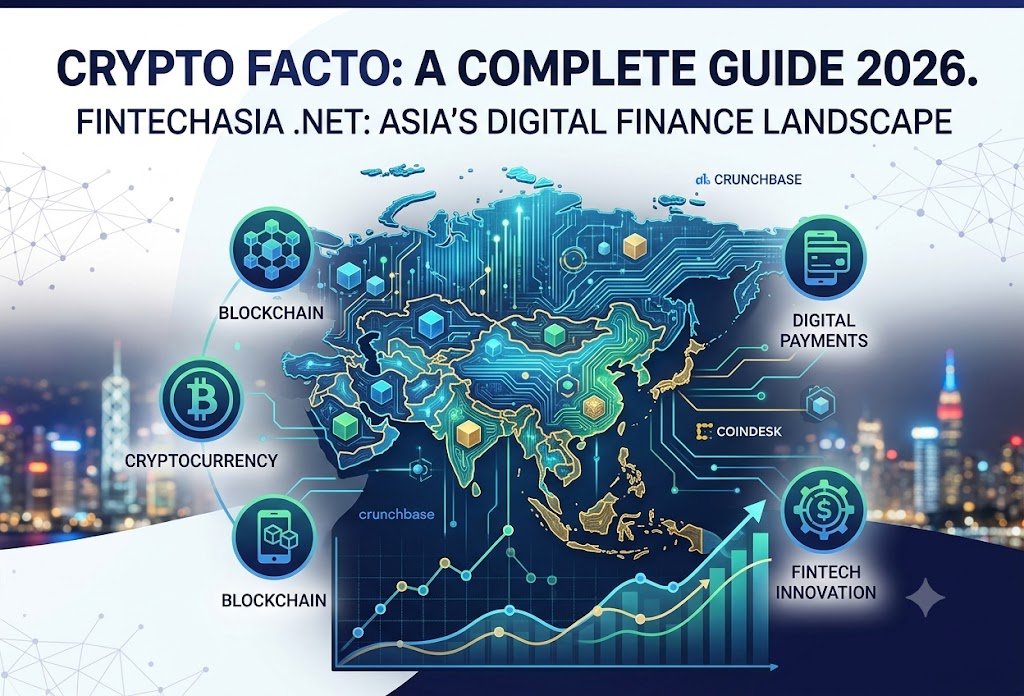
This is where fintechasia .net crypto facto attracts attention. The phrase is commonly associated with cryptocurrency and digital-finance content connected to FintechAsia.net. The website includes a “Crypto Facto” section and presents its content as a way to simplify cryptocurrency, blockchain, trading concepts, financial technology, and regulatory developments for a wider audience.
For beginners, the topic offers an entry point into digital currencies without requiring advanced technical knowledge. For experienced readers, it can provide a regional perspective on how blockchain technology is interacting with Asian banking systems, payment companies, startups, regulators, and investors.
However, readers should approach any cryptocurrency publication with a balanced mindset. Educational content can improve understanding, but it should never replace independent research, professional financial guidance, or careful risk management. This detailed guide explains the meaning, relevance, opportunities, limitations, and future direction of fintechasia .net crypto facto in a simple and practical way.
What Is FintechAsia .net Crypto Facto?

The term fintechasia .net crypto facto generally refers to the cryptocurrency-focused information, commentary, and educational material associated with FintechAsia.net. The website’s navigation includes a dedicated Crypto Facto category alongside business news and finance content, suggesting that digital assets form an important part of its wider editorial coverage.
Rather than viewing Crypto Facto as a single cryptocurrency, blockchain, wallet, or investment product, it is more useful to understand it as a content concept. It brings together information related to crypto markets, blockchain applications, financial technology, digital payments, regulation, and the changing relationship between traditional finance and decentralized systems.
The name itself reflects this combination. “FintechAsia” points toward financial technology developments across Asian markets, while “Crypto Facto” suggests a focus on cryptocurrency facts, trends, explanations, and practical developments.
The platform’s own published description emphasizes financial literacy, accessibility, market awareness, blockchain education, decentralized finance, and responsible decision-making. However, readers should distinguish between independently verified services and features that may only be described in promotional or editorial content.
Why FintechAsia .net Crypto Facto Is Attracting Search Interest
People searching for fintechasia .net crypto facto are likely trying to understand what the phrase means, whether it represents a trustworthy information source, and what type of cryptocurrency content it provides.
Some visitors may arrive with navigational intent because they want to locate a specific section of FintechAsia.net. Others may have informational intent and want to learn about blockchain, Bitcoin, Ethereum, decentralized finance, crypto regulation, or Asian digital-payment markets.
There can also be a commercial or transactional element behind the search. A reader may be researching crypto platforms, comparing investment resources, studying market opportunities, or looking for educational material before using an exchange. Nevertheless, Crypto Facto should not automatically be treated as a trading platform simply because an article discusses market tools or cryptocurrency transactions.
Its growing visibility also reflects a larger change in online behavior. Readers increasingly want cryptocurrency information that is regional, practical, and easy to understand. Global crypto websites often focus heavily on the United States or Europe. A platform with an Asian-finance perspective can help explain how digital assets are being discussed in markets such as Hong Kong, Singapore, Japan, South Korea, India, Indonesia, Pakistan, and the Philippines.
Main Areas Covered by FintechAsia .net Crypto Facto
The subject matter associated with fintechasia .net crypto facto sits at the intersection of finance and technology. It is not limited to daily Bitcoin prices or short-term market predictions. Its potential scope includes the infrastructure, policies, products, risks, and business models shaping digital finance.
| Main Area | What It Involves | Why It Matters |
| Cryptocurrency | Bitcoin, Ethereum, altcoins and digital assets | Helps readers understand digital value and market behavior |
| Blockchain technology | Distributed records, consensus systems and transaction verification | Explains the technology supporting many crypto networks |
| Decentralized finance | Blockchain-based lending, borrowing, trading and saving | Shows how financial services can operate through smart contracts |
| Stablecoins | Tokens designed to maintain a relatively stable value | Important for payments, transfers and digital-asset settlement |
| Digital payments | Mobile wallets, payment gateways and cross-border transfers | Connects cryptocurrency with everyday financial activity |
| Tokenization | Representing traditional or physical assets digitally | May change how securities, property and commodities are managed |
| Crypto regulation | Licensing, taxation, consumer protection and compliance | Determines how digital-asset businesses can operate legally |
| Cybersecurity | Wallet protection, scams, private keys and platform security | Helps users reduce avoidable financial and privacy risks |
| Financial inclusion | Technology-based access to payments and financial services | Relevant in regions with limited traditional banking access |
| Market education | Explanations, analysis and responsible research methods | Supports better-informed decisions without guaranteeing results |
These areas are connected rather than separate. Stablecoins depend on blockchain infrastructure, digital exchanges depend on cybersecurity, tokenized assets depend on legal recognition, and decentralized finance depends on smart contracts.
By connecting these subjects, fintechasia .net crypto facto can help readers understand digital finance as an ecosystem instead of presenting cryptocurrency as nothing more than speculative price movement.
How FintechAsia .net Crypto Facto Connects Fintech and Cryptocurrency
Financial technology, commonly called fintech, includes software and digital systems that improve or replace conventional financial services. Mobile banking, online payment gateways, digital lending, automated investment applications, fraud-detection systems, and electronic wallets are all examples of fintech.
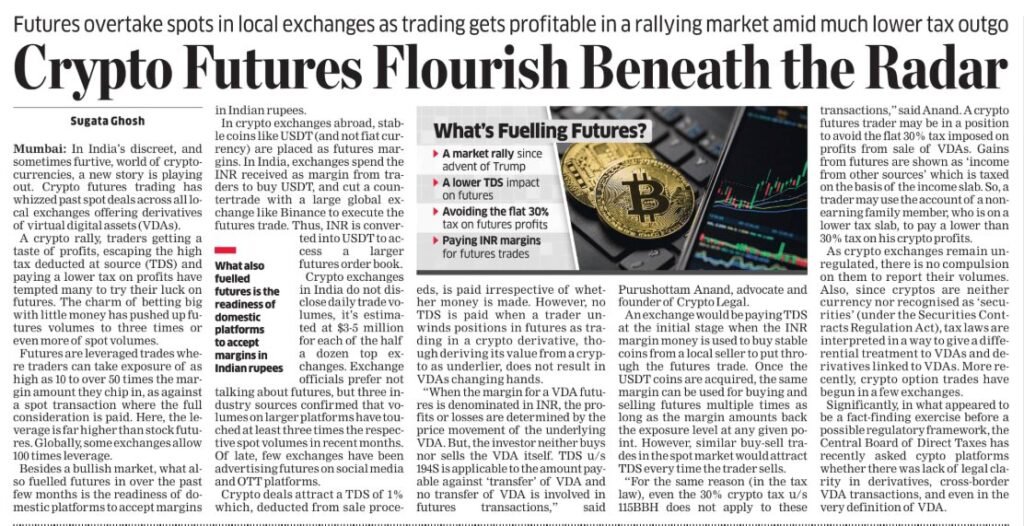
Cryptocurrency is related to fintech, but the two terms are not identical. Many fintech applications continue to rely on banks, card networks, regulated payment providers, and centralized databases. Cryptocurrency systems may use decentralized blockchain networks that allow transactions to occur without a traditional financial institution directly controlling every transfer.
Bitcoin was introduced as a peer-to-peer electronic cash system in which online payments could be sent directly between parties without relying on a financial institution to process every transaction.
The value of fintechasia .net crypto facto lies in examining where these two worlds meet. A bank may use blockchain infrastructure while still operating under traditional regulation. A fintech company may add stablecoin payments to an existing mobile application. An investment company may offer access to tokenized securities while maintaining conventional identity-verification procedures.
This combination is likely to shape the next phase of digital finance. The future may not involve cryptocurrency completely replacing traditional banking. It may instead involve regulated financial institutions adopting selected blockchain functions where they improve settlement, transparency, programmability, or cross-border efficiency.
Why the Asian Market Is Important
Asia is especially important to the conversation surrounding fintechasia .net crypto facto because the region contains major technology centers, large remittance markets, rapidly expanding mobile-payment systems, established financial hubs, and a diverse range of regulatory approaches.
The region cannot be treated as a single market. Rules that apply in one Asian jurisdiction may be completely different in another. Some authorities encourage licensed digital-asset businesses, while others restrict cryptocurrency trading, payments, mining, promotion, or access to banking services.
At the same time, central banks across Asia and the Pacific have studied central bank digital currencies. An International Monetary Fund survey covering 34 Asian economies examined CBDC development, crypto assets, payment systems, financial inclusion, and the policy challenges facing the region.
Hong Kong provides a useful example of how quickly the landscape can change. In April 2026, Hong Kong approved its first licences for fiat-backed stablecoins under a regulatory regime that had taken effect in August 2025. The approvals involved HSBC and a joint venture formed by Standard Chartered, Animoca Brands, and Hong Kong Telecommunications.
Developments like these demonstrate why region-specific coverage matters. Readers need more than global price charts. They also need context about local regulation, banking participation, consumer protection, taxation, payment adoption, startup investment, and the legal status of digital assets.
Understanding Blockchain Through FintechAsia .net Crypto Facto
Blockchain is the foundation behind many cryptocurrency systems, but it is often explained in unnecessarily complicated language. At a basic level, a blockchain is a shared digital record maintained across a network of computers.
Transactions are grouped, verified, and recorded according to the rules of the network. Once valid information has been added, changing historical records may be difficult because multiple network participants hold and verify copies of the ledger.
Through topics associated with fintechasia .net crypto facto, readers can explore how blockchain technology is applied beyond cryptocurrency trading. Businesses may investigate it for supply-chain records, digital identity, settlement, asset ownership, document verification, or programmable financial transactions.
Not every business problem requires a blockchain. A normal database may be faster, less expensive, and easier to maintain when a trusted central organization already exists. Blockchain becomes more relevant when several parties need to coordinate, verify shared information, reduce dependence on one database owner, or transfer digitally represented value.
A trustworthy explanation should therefore avoid claiming that blockchain automatically solves every financial problem. The technology creates new possibilities, but it also introduces questions about scalability, governance, privacy, legal responsibility, software vulnerabilities, and operational cost.
The strongest educational value of fintechasia .net crypto facto would come from explaining both sides: what blockchain can improve and where its limitations make traditional systems more suitable.
Decentralized Finance and Smart Contracts
Decentralized finance, usually shortened to DeFi, refers to financial products and services delivered through blockchain-based applications. Depending on the protocol, users may be able to exchange digital assets, lend funds, borrow against collateral, earn rewards, or access other financial functions without using a conventional bank as the central operator.
Ethereum describes DeFi as an open financial system built for the internet, with products for borrowing, saving, investing, and trading through programmable open-source technology.
Smart contracts make many of these activities possible. A smart contract is software stored on a blockchain that performs defined actions when required conditions are met. It can transfer tokens, calculate collateral requirements, distribute rewards, or enforce protocol rules.
For readers researching fintechasia .net crypto facto, understanding smart contracts is important because they introduce both automation and risk. A properly designed contract can execute consistently without depending on manual processing. A poorly designed contract can contain vulnerabilities, flawed economic assumptions, or administrative controls that users do not fully understand.
DeFi should therefore not be described as completely risk-free or completely decentralized. Some protocols retain administrator privileges, depend on external price feeds, use centralized websites, or rely on a small development team.
Users should examine who controls the contract, whether the code has been independently audited, how prices are calculated, what happens during extreme volatility, and whether funds can be frozen or upgraded by an administrator.
Stablecoins, CBDCs and Tokenized Assets
Stablecoins, central bank digital currencies, and tokenized assets are often discussed together, but they are different concepts. A clear fintechasia .net crypto facto guide should help readers understand these differences.
A stablecoin is generally a privately issued digital token designed to maintain a stable value relative to a currency or another asset. Its reliability depends on factors such as reserve quality, redemption rights, governance, custody, liquidity, regulation, and transparency.
A CBDC is a digital form of central bank money. Unlike most private stablecoins, it represents a direct connection to a country’s monetary authority. The exact design can vary depending on whether the CBDC is intended for retail users, financial institutions, or wholesale settlement.
Tokenization involves representing an asset, claim, or financial instrument digitally. The token might represent a bond, fund unit, property interest, deposit, commodity, invoice, or another form of value.
| Digital-Finance Instrument | Typical Issuer | Main Purpose | Important Risk Question |
| Cryptocurrency | Decentralized network or project | Transfer, utility, investment or network participation | What creates demand and who controls development? |
| Stablecoin | Private company or protocol | Stable-value payments, trading and settlement | Are reserves real, liquid and redeemable? |
| CBDC | Central bank | Digital public money and payment infrastructure | How will privacy, access and control be managed? |
| Tokenized security | Regulated issuer or financial institution | Digital representation of an investment | Does the token provide legally enforceable ownership? |
| Utility token | Blockchain project | Access to a product, network or service | Does the token have genuine use beyond speculation? |
| Governance token | Decentralized protocol or organization | Voting and protocol participation | Is governance genuinely distributed or concentrated? |
Tokenization may improve certain financial processes, but it does not remove the need for legal clarity, trustworthy settlement, operational resilience, and responsible governance. The IMF has emphasized that successful tokenized finance depends on public trust, safe settlement assets, clear laws, robust code governance, and international coordination.
Security, Privacy and Trust
Security is one of the most important subjects connected to fintechasia .net crypto facto. Cryptocurrency transactions can be difficult or impossible to reverse, which means user mistakes, compromised accounts, fraudulent websites, and stolen private keys may have serious consequences.
The first step toward safety is understanding the difference between a blockchain network and the service used to access it. A blockchain may continue operating normally while an exchange, wallet provider, website, mobile application, or individual account is compromised.
Users should never assume that the word “blockchain” automatically means secure. Security depends on wallet design, account protection, private-key management, device safety, smart-contract quality, platform governance, and user behavior.
Phishing is another major concern. A fake website may closely resemble a genuine exchange or wallet. Fraudsters may also use social media messages, fake customer-support accounts, misleading giveaways, investment groups, or fabricated profit screenshots to build trust.
Educational content should encourage users to confirm website addresses, protect recovery phrases, activate strong account security, avoid unknown wallet connections, and carefully review transaction details before approval.
Readers should also be cautious when a website claims guaranteed profits, secret trading systems, risk-free returns, instant recovery of lost cryptocurrency, or pressure-based investment opportunities. Legitimate education explains uncertainty. It does not promise impossible outcomes.
How to Evaluate FintechAsia .net Crypto Facto Content
Readers should evaluate fintechasia .net crypto facto using the same standards they would apply to any financial publication. A professional-looking website can be useful, but design alone does not prove accuracy or independence.
The first question is whether the article clearly separates facts from opinions. A report about a regulatory announcement should identify the relevant authority and date. A market prediction should be labelled as analysis rather than presented as certainty.
The second question is whether the author provides evidence. Strong content links claims to official documents, blockchain data, regulatory statements, company disclosures, technical documentation, or credible reporting.
The third question concerns conflicts of interest. Readers should look for sponsorship disclosures, affiliate relationships, token holdings, paid promotions, or commercial partnerships that could influence coverage.
The publication date also matters. Cryptocurrency regulation, platform policies, fees, market conditions, and available services change quickly. An article that was accurate several years ago may no longer reflect the current environment.
Finally, readers should compare important claims with additional sources. Fintechasia .net crypto facto may be a useful starting point, but high-value financial decisions should not depend on one article, one influencer, one price forecast, or one website.
Benefits of FintechAsia .net Crypto Facto for Different Readers
Beginners can benefit from content that translates blockchain terminology into simple language. Terms such as private keys, consensus, staking, tokenization, gas fees, liquidity pools, stablecoins, and smart contracts can be difficult when they are introduced without context.
Business owners may use fintechasia .net crypto facto to understand how digital assets could affect payments, customer transactions, cross-border settlement, fundraising, supply-chain finance, and compliance requirements.
Students and researchers can use the topic as a starting point for studying the relationship between finance, computer science, law, economics, and public policy. Cryptocurrency is not only a market subject. It is also a governance and infrastructure subject.
Investors may find value in explanations of market structures, project fundamentals, token utility, custody, regulation, and risk. However, educational material should support research rather than replace it.
Financial professionals can also benefit from regional coverage. Banks, payment companies, accountants, consultants, compliance teams, and legal specialists increasingly encounter clients who use or want to use digital assets.
The most useful content does not attempt to turn every reader into an active trader. It helps people understand the technology well enough to decide whether participation is suitable for their goals and risk tolerance.
Limitations Readers Should Understand
The main limitation of fintechasia .net crypto facto is that online descriptions do not always establish exactly what independently verified services are available. Some articles may describe price tracking, dashboards, trading features, security systems, or other tools, but readers should verify those functions directly before creating an account, transferring funds, or providing personal information.
Educational publications may also simplify complicated subjects. Simplification is useful for beginners, but it can remove important details involving custody, taxation, liquidity, smart-contract risk, legal ownership, or jurisdiction-specific regulation.
Another limitation is the speed of change. An article can become outdated after a regulator issues new rules, a blockchain completes an upgrade, an exchange changes its services, or a stablecoin alters its reserve structure.
Crypto content may also become influenced by market sentiment. During rising markets, writers can become overly optimistic. During falling markets, they may become excessively negative. Reliable analysis should remain evidence-based under both conditions.
Global regulators continue to develop crypto and stablecoin frameworks, but implementation remains uneven. The Financial Stability Board reported that jurisdictions had made progress while significant regulatory gaps and inconsistencies still remained, creating challenges for oversight and cross-border coordination.
This uncertainty makes cautious language especially important. Readers should be suspicious of any source that presents regulatory outcomes, token prices, or technological success as guaranteed.
My Opinion on FintechAsia .net Crypto Facto
In my opinion, the strongest reason to explore fintechasia .net crypto facto is not to find the next coin that might rise overnight. Its real potential lies in helping readers understand how cryptocurrency is becoming connected with mainstream financial technology across Asia.
Too much crypto content focuses on excitement. It discusses price increases, market rumors, and bold predictions while giving little attention to custody, regulation, product design, cybersecurity, or real-world usefulness.
A regional educational platform can offer something more meaningful by explaining how Asian banks, startups, regulators, payment providers, and consumers are responding to digital assets. That context is more valuable than another article promising quick returns.
At the same time, I would not accept every claim simply because it appears on a finance-related website. I would verify platform features, licensing information, market data, security claims, and investment statements through independent sources.
For me, the best way to use fintechasia .net crypto facto is as the beginning of research rather than the end. Read the explanation, identify the important questions, and then confirm the details using official regulators, project documentation, audited reports, and recognized financial publications.
That approach feels more realistic, responsible, and human than either blindly supporting cryptocurrency or rejecting the entire technology without studying it.
The Future of FintechAsia .net Crypto Facto
The future relevance of fintechasia .net crypto facto will depend on whether its content evolves with the digital-finance industry. Readers will increasingly need explanations that go beyond basic definitions of Bitcoin and blockchain.
Tokenized bank deposits, regulated stablecoins, institutional custody, digital identity, artificial-intelligence fraud detection, real-world asset tokenization, and blockchain-based settlement are likely to remain important subjects.
Regulatory reporting will also become more valuable. Different Asian jurisdictions are creating their own approaches to licensing, taxation, advertising, consumer protection, stablecoin issuance, anti-money-laundering controls, and institutional participation.
Another opportunity is stronger fact-checking. Crypto markets move quickly, making them vulnerable to rumors, manipulated screenshots, fake announcements, and misleading social-media posts. A “Crypto Facto” publication can strengthen its identity by separating confirmed developments from speculation.
Educational depth will matter as well. Beginners may need simple guides, while professional readers require detailed analysis of regulation, infrastructure, governance, liquidity, accounting, and cybersecurity.
The most successful version of fintechasia .net crypto facto would combine clear explanations with transparent sourcing. It would avoid unrealistic promises, disclose commercial relationships, correct outdated information, and help readers understand risk as carefully as opportunity.
Conclusion: Is FintechAsia .net Crypto Facto Worth Reading?
Fintechasia .net crypto facto represents a growing interest in the intersection of cryptocurrency, blockchain, financial technology, and Asian markets. It can help readers discover important ideas involving Bitcoin, Ethereum, decentralized finance, stablecoins, CBDCs, tokenization, digital payments, cybersecurity, and crypto regulation.
Its greatest value is educational. Readers can use the topic to develop a clearer understanding of how digital assets work and how they may interact with traditional financial systems.
However, no crypto publication should be treated as a guaranteed investment guide. Platform features should be verified, financial claims should be checked, and market predictions should be viewed as uncertain. Users should never transfer funds or share personal information based only on promotional language.
When approached responsibly, fintechasia .net crypto facto can serve as a practical starting point for exploring Asia’s changing digital-finance landscape. The key is to combine accessible learning with independent verification, careful security habits, and realistic expectations.
Cryptocurrency may continue to influence payments, banking, investment, and technology, but informed participation will always be safer than decisions driven by fear, excitement, or online hype.
Frequently Asked Questions About FintechAsia .net Crypto Facto
What does fintechasia .net crypto facto mean?
Fintechasia .net crypto facto generally refers to cryptocurrency, blockchain, and digital-finance content associated with FintechAsia.net. It focuses on subjects such as crypto markets, financial technology, decentralized finance, digital payments, regulation, and blockchain adoption in Asia.
Is FintechAsia .net Crypto Facto a cryptocurrency exchange?
It should not automatically be treated as a cryptocurrency exchange. It appears primarily connected with informational and educational content. Readers should independently verify any claims about trading, wallets, dashboards, deposits, withdrawals, or investment services before providing money or personal information.
Is the information on FintechAsia .net Crypto Facto suitable for beginners?
The topic can be useful for beginners because it explains cryptocurrency and fintech concepts in accessible language. However, beginners should compare important information with official project documentation, recognized regulators, and other credible sources before making financial decisions.
Can FintechAsia .net Crypto Facto help with crypto investment decisions?
It may support research by explaining market concepts, technology, regulation, and risk. It should not be used as the sole basis for an investment. Cryptocurrency prices are volatile, and no article can guarantee profits or eliminate financial risk.
How can readers use FintechAsia .net Crypto Facto safely?
Readers should treat the content as educational material, verify time-sensitive claims, confirm website addresses, avoid sharing wallet recovery phrases, research platforms before transferring funds, and consult a qualified professional when financial, tax, or legal consequences are significant and more.
