

Table of Contents
The phrase in video games PlayBattleSquare has gained attention among people searching for competitive gaming information, arena-style gameplay, multiplayer strategies, and practical game guides. However, the phrase can be confusing because PlayBattleSquare is discussed both as a gaming content website and as a tactical arena concept built around compact, square-shaped battle areas.
This guide explains what the term means, how the gameplay concept works, and why square arenas can create exciting competitive matches. It also explores movement, map control, team coordination, progression, player safety, and the wider PlayBattleSquare content experience.
Whether you are a casual player, competitive gamer, content creator, or aspiring game designer, understanding in video games PlayBattleSquare can help you recognize the mechanics that make fast arena games engaging and replayable.
What Does In Video Games PlayBattleSquare Mean?
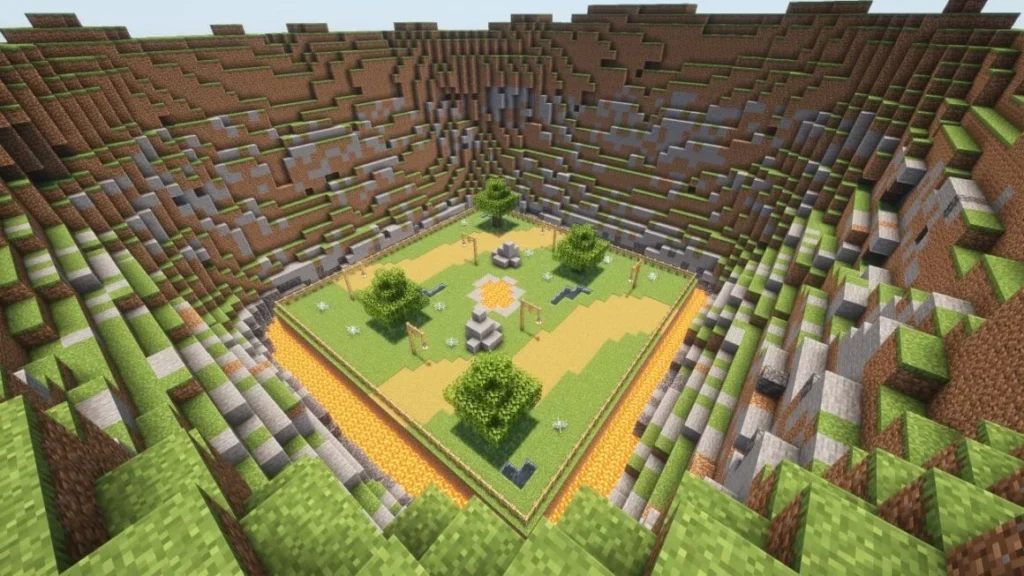
The phrase in video games PlayBattleSquare can refer to gaming content published through PlayBattleSquare and to a compact arena-style game concept discussed on the website.
PlayBattleSquare describes itself through content related to video games, Minecraft, gaming equipment, competitive formats, technology, and online gaming culture. Its homepage features guides covering game mechanics, gaming news, multiplayer experiences, and practical strategies. (Playbattlesquare)
A PlayBattleSquare article also describes the term as a tactical multiplayer arena mode. In that interpretation, players compete for space, control square tiles, manage resources, and react quickly to opponents.
Another article presents it as a fast arena format built around a small grid. Matches take place in a limited area where positioning and timing matter as much as reaction speed. (Playbattlesquare)
Therefore, the phrase should not automatically be treated as the confirmed name of a separately released commercial game. It is more accurately understood as a gaming topic, content identity, and arena-style gameplay concept.
| Interpretation | What it means | Main purpose |
| Gaming website | A website publishing articles about games, technology and gaming culture | Information and entertainment |
| Arena concept | A compact multiplayer mode built around square spaces or tiles | Competitive gameplay |
| Search phrase | A keyword used to find PlayBattleSquare gaming content | Navigation and research |
| Design framework | A way to study movement, combat, objectives and map control | Game analysis and development |
Why Players Search for In Video Games PlayBattleSquare
People searching for in video games PlayBattleSquare may have several intentions. Some want to find the official website, while others want an explanation of the phrase. Many are looking for gameplay strategies, multiplayer tips, game recommendations, or information about competitive arena design.
This creates a combination of informational and navigational search intent. The informational side involves learning what PlayBattleSquare means and how its described mechanics work. The navigational side involves locating the website, its gaming categories, or a particular article.
There may also be a limited transactional element. A reader exploring gaming equipment, software, accessories, or game recommendations may eventually compare products or services. However, the core purpose of the phrase remains educational.
A complete answer should therefore avoid presenting PlayBattleSquare as something it cannot verify. Instead, it should explain the term clearly and show readers how the related arena mechanics function.
This approach is more trustworthy than repeating promotional claims without checking whether there is an official game listing, downloadable client, developer page, or established store release.
Is PlayBattleSquare a Game, Platform or Gaming Blog?
The identity behind in video games PlayBattleSquare is not completely consistent across every page. The main domain operates primarily as a gaming content website, publishing articles in categories such as Playing Games, Gaming Adventures, technology, and Minecraft.
Some pages describe PlayBattleSquare as if it were a playable game with character classes, weapons, deathmatches, capture-the-flag scenarios, accounts, guilds, and tournaments. One published guide, for example, discusses warriors, rogues, equipment upgrades, team communication, and multiplayer events. (Playbattlesquare)
Other pages describe PlayBattleSquare as a design concept involving compact grids, tile control, short rounds, fast movement, and balanced spawn points. (Playbattlesquare)
These descriptions should be read carefully. Without a clearly verified publisher, official download page, recognized game-store listing, or technical support section for a standalone title, readers should not assume every game-like feature represents an available product.
The safest conclusion is that PlayBattleSquare is primarily a gaming information brand whose content sometimes uses the name for conceptual or illustrative gameplay experiences.
How the PlayBattleSquare Arena Concept Works
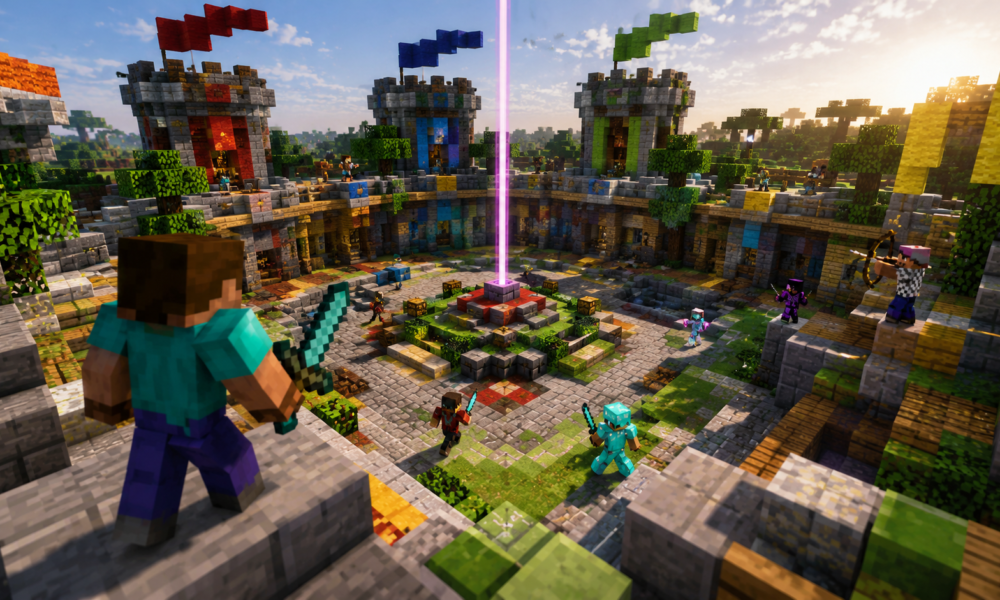
At the centre of in video games PlayBattleSquare is the idea of a controlled battle area. Instead of giving players an enormous open world, the arena limits movement and forces frequent interaction.
A square or grid-based map creates understandable boundaries. Players can quickly identify corners, central routes, side paths, defensive positions, and dangerous open spaces. This makes the battlefield easier to learn but not necessarily easy to master.
The main objective may involve defeating opponents, holding specific tiles, capturing zones, collecting resources, or surviving until the end of a round. Each objective changes how players use the same arena.
A survival objective encourages cautious movement. A tile-control mode rewards continuous pressure. A team elimination match places more value on coordinated attacks and reviving or protecting allies.
Because the battlefield is compact, mistakes are punished quickly. Poor positioning can expose a player from several directions, while good timing can allow a skilled competitor to control a large part of the arena.
This balance between simplicity and tactical depth is one reason compact arena formats remain appealing.
Why Square Maps Create Competitive Pressure
The square structure associated with in video games PlayBattleSquare creates natural points of conflict. Corners provide protection but can become traps. The centre offers access to several routes but leaves players exposed. Outer paths may support safer movement, although they can take longer.
A well-designed square arena gives every area a purpose. Players should have reasons to move rather than remaining in one powerful position for an entire match.
The shape also helps players build a mental map. After a few rounds, competitors begin to remember common attack routes, resource locations, lines of sight, and escape paths.
This familiarity allows strategy to develop. New players initially react to whatever is directly in front of them. Experienced players predict where opponents are likely to appear several seconds later.
| Map area | Potential advantage | Possible risk |
| Centre | Fast access to objectives and routes | Exposure from multiple directions |
| Corners | Temporary protection and easier defence | Limited escape options |
| Outer edges | Safer rotation and controlled movement | Longer distance from central objectives |
| Elevated zones | Better visibility and ranged control | Easy to identify and target |
| Narrow routes | Useful for ambushes and defence | Vulnerable to traps and area attacks |
A fair square map should provide counterplay. Every strong position needs a weakness, and every route should involve a meaningful trade-off.
Movement and Positioning in PlayBattleSquare
Movement is one of the most important skills in in video games PlayBattleSquare. Fast reactions help, but players who understand positioning usually make better decisions before combat even begins.
Good positioning means staying close enough to influence an objective without becoming an easy target. It also means maintaining an escape route and avoiding spaces where several opponents can attack at once.
Players should treat movement as information gathering. Crossing the map reveals enemy locations, contested areas, missing resources, and possible ambushes.
Standing still may feel safe, but it allows opponents to gain control of the arena. Constant movement is not always better, either. Running without a purpose can expose a player and make their behaviour predictable.
Effective players vary their pace. They move quickly through dangerous open spaces, slow down near corners, and pause briefly when listening or watching for opponents.
The goal is not simply to travel faster. It is to arrive at the right place before the opposing team understands why that location matters.
Combat, Timing and Decision-Making
Combat in in video games PlayBattleSquare can be understood as a series of short decisions. Players must decide when to attack, retreat, defend, chase, collect an item, or support a teammate.
Attacking first does not always create an advantage. A player who begins combat from a weak position may lose even with accurate aim.
Timing becomes especially important around objectives and power-ups. Entering too early can leave a player isolated. Arriving too late may allow the opposing team to secure the area without resistance.
Strong decision-making depends on reading the current situation. A player should consider health, available abilities, enemy locations, teammate positions, remaining time, and the value of the objective.
The best action may change within seconds. A retreat can become a counterattack when support arrives. A defensive position can become dangerous when opponents gain control of another route.
This constant adjustment gives arena games their intensity. The environment is small, but the number of possible decisions remains large.
Map Control and Objective Management
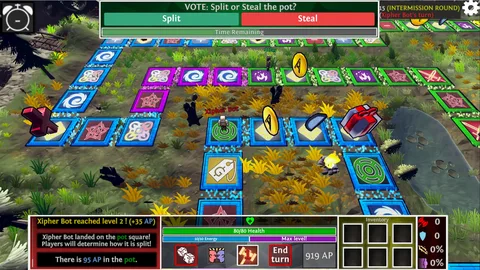
Map control is central to the tactical interpretation of in video games PlayBattleSquare. It does not mean physically occupying every part of the battlefield at once. It means influencing the areas that matter most.
A team can create control through visibility, pressure, traps, ranged attacks, or the threat of a coordinated push. Opponents may avoid an area even when nobody is standing directly inside it.
Objectives prevent matches from becoming passive. A capture point, valuable resource, moving zone, or timed event forces players to leave safe positions.
Teams must decide how many players should contest the objective and how many should watch entrances. Sending everyone to one location can create strong immediate pressure but leaves other routes unprotected.
In a tile-control interpretation, players may need to capture and retain square spaces while denying the same opportunity to opponents. The PlayBattleSquare design guide specifically associates success with positioning, power-up control, resource management, and maintaining tile advantage. (Playbattlesquare)
The strongest teams do not chase every enemy. They fight when combat supports the objective and disengage when a battle offers little strategic value.
Resources, Equipment and Power-Ups
Resources can shape the rhythm of in video games PlayBattleSquare. Health items, ammunition, temporary abilities, armour, movement boosts, or stronger weapons encourage players to compete for specific locations.
A resource is most interesting when obtaining it involves risk. An extremely powerful item placed in a completely safe location gives one player an unfair advantage. Placing it in an exposed or contested area creates a meaningful decision.
Players must compare immediate needs with future value. Using a healing item now may prevent elimination, but saving it could provide a greater advantage during the final objective.
Equipment also creates different playstyles. A close-range weapon rewards aggressive movement and corner control. A long-range weapon benefits from open sightlines and elevated positions.
Balance depends on ensuring that no item solves every problem. Powerful equipment should have limitations involving range, speed, accuracy, availability, or recovery time.
When resources are distributed fairly, players can adapt their plans rather than following one dominant strategy in every match.
Teamwork and Multiplayer Communication
Team coordination adds another layer to in video games PlayBattleSquare. Individual skill still matters, but organized players can combine abilities, cover multiple routes, and recover from mistakes more effectively.
Useful communication is short and specific. Telling teammates where an opponent is located, which route is unprotected, or when an ability is ready provides information they can act on immediately.
Constant shouting can make communication less useful. When every small detail is treated as urgent, important warnings become harder to recognize.
Teams also need role flexibility. A player may begin as an attacker but switch to defence when the match changes. Another may leave the central fight to protect a side route or collect a resource.
Some PlayBattleSquare content describes social interaction, clans, guilds, cooperative missions, tournaments, and multiplayer communication as parts of the broader experience. However, those details appear in descriptive articles rather than a clearly documented official game manual. (Playbattlesquare)
Readers should therefore treat them as examples of how the concept could function, not guaranteed features of a verified standalone release.
Progression and Replay Value
Progression helps in video games PlayBattleSquare remain interesting beyond a single match. Players need a sense that their understanding, skill, or available options are developing.
The most satisfying progression is often personal improvement. A player begins to recognize map patterns, manage resources more efficiently, aim with greater accuracy, and communicate more clearly.
External rewards can support this growth. Rankings, cosmetic items, achievements, character options, badges, or seasonal challenges give players visible goals.
However, progression should not destroy competitive fairness. When long-term players receive overwhelming combat advantages, beginners may feel they have little chance to succeed.
A balanced system separates experience from unfair power. Experienced players may have more cosmetic choices or strategic flexibility, but new players should still be able to compete through skill and good decisions.
Short, repeatable rounds also support replay value. Players can experiment with a new route or strategy without committing to a very long session.
Each match becomes a small learning cycle: make a choice, observe the result, adjust the plan, and try again.
Player Experience and Accessible Game Design
A successful version of in video games PlayBattleSquare would need more than exciting mechanics. Players must be able to understand what is happening on screen.
Clear visual feedback helps competitors recognize damage, objectives, available abilities, team status, and dangerous areas. Important information should not depend only on subtle colours or tiny text.
Controls should feel responsive and predictable. When a player loses, the reason should normally be a decision or execution error rather than unclear input, confusing animation, or inconsistent movement.
Sound also provides useful information. Footsteps, ability effects, alerts, and objective signals can help players understand events outside the visible area.
Accessibility settings can make the experience available to more people. Remappable controls, readable text, subtitle options, adjustable sensitivity, reduced visual effects, and alternatives to colour-only signals can reduce unnecessary barriers.
These features do not make competition less serious. They help ensure that the challenge comes from strategy and execution rather than from an interface that excludes part of the audience.
Safety, Privacy and Responsible Gaming
Anyone exploring in video games PlayBattleSquare should consider privacy and online safety, especially when following unfamiliar links or interacting with multiplayer communities.
PlayBattleSquare has a published privacy policy stating that it addresses information collected and recorded by the website. It also provides a public contact page for questions and feedback. (Playbattlesquare)
Users should still avoid entering gaming passwords on pages reached through unexpected messages. The US Federal Trade Commission warns that phishing messages may imitate familiar companies to steal passwords and financial information. It also recommends using stronger account security measures, including two-factor authentication. (Consumer Advice)
Parents should review age ratings, communication settings, spending controls, and online interaction features before allowing children to use any gaming service. ESRB guidance explains that parental controls can restrict games by rating, manage purchases, limit play time, and control online communication on many devices. (ESRB Ratings)
| Safety area | Main risk | Sensible response |
| Account login | Password theft or fake login pages | Use unique passwords and two-factor authentication |
| Online chat | Harassment or unwanted contact | Use privacy, mute, block and reporting controls |
| Purchases | Unplanned or unauthorized spending | Set purchase limits and require approval |
| Downloads | Malware or unwanted software | Use official stores and verified sources |
| Play time | Sleep disruption or neglected responsibilities | Set practical session boundaries and take breaks |
Responsible gaming also means maintaining balance. Regular breaks, healthy sleep, physical activity, school or work responsibilities, and offline relationships should not be replaced by continuous play.
How PlayBattleSquare Fits Modern Gaming Content
The wider value of in video games PlayBattleSquare may be its role as a gaming-content topic rather than a single product.
Modern players often search for direct answers instead of traditional reviews. They want help solving a particular problem, improving a mechanic, choosing equipment, understanding an update, or finding a strategy.
PlayBattleSquare publishes material across game guides, Minecraft topics, multiplayer experiences, competitive formats, gaming technology, and entertainment. Its own article about practical gaming content argues that players increasingly value step-by-step knowledge and community-driven learning. (Playbattlesquare)
This type of content can support several audiences. Beginners receive explanations without needing to master technical language. Experienced players can compare strategies. Content creators can discover topics for videos, streams, and discussions.
The weakness of broad gaming sites is that information quality may vary between articles. Readers should compare claims with official game documentation, developer announcements, verified store listings, and direct testing whenever possible.
A helpful guide should make the source of each claim clear instead of blending confirmed information with imagined gameplay details.
My Opinion About In Video Games PlayBattleSquare
In my opinion, in video games PlayBattleSquare is more interesting as a game-design idea and gaming-content keyword than as the name of a clearly established standalone game.
The compact square-arena concept has genuine potential. Small maps create pressure, encourage encounters, and allow players to learn routes quickly. Tile control, timed resources, short rounds, and changing objectives could produce a competitive mode that is easy to understand but difficult to master.
However, I would be careful about describing PlayBattleSquare as a fully available multiplayer title without a verified store page, developer profile, release history, or official technical documentation.
Some pages speak about character classes, guilds, accounts, weapons, and tournaments with great confidence. Other pages present the name as a design framework. That inconsistency may confuse readers who simply want to know what they can actually play.
A more transparent identity would improve trust. The website could clearly separate real game coverage, conceptual design articles, fictional examples, and any playable services it genuinely operates.
The concept is promising, but accuracy matters more than exciting language.
Who Can Benefit From PlayBattleSquare Content?
The information surrounding in video games PlayBattleSquare can benefit several kinds of readers.
Casual gamers may use the website to discover gaming topics and understand common mechanics. Competitive players may study positioning, map awareness, timing, resource control, and team communication.
Aspiring developers can examine how compact maps affect player behaviour. A limited arena provides a useful environment for learning about spawn balance, sightlines, movement speed, objective placement, and match length.
Writers and content creators can also study the phrase as an example of search-driven gaming content. It combines a brand name with a broad topic, allowing articles to address definitions, strategies, safety, game design, and community behaviour.
Parents may find value in the wider discussion when trying to understand competitive play and online interaction. However, they should still use established rating systems and device-level parental controls when assessing a particular game.
The content is most useful when readers treat it as a starting point for research rather than the only authority they consult.
How to Evaluate Future PlayBattleSquare Claims
As in video games PlayBattleSquare receives more coverage, readers should learn to separate verified details from repetition.
A confirmed game should normally have identifiable developers or publishers, supported platforms, release information, system requirements, official screenshots, update notes, and a legitimate download or purchase location.
A gaming blog should provide clear authorship, publication dates, contact information, privacy details, and distinctions between reporting, opinion, and fictional examples.
Readers should be cautious when an article describes detailed mechanics without linking to an official game source. Repetition across several websites does not automatically turn a claim into evidence, especially when each page appears to repeat the same unsupported description.
Screenshots should also match the claimed game. Generic gaming images may illustrate an article, but they do not prove that a specific title or feature exists.
The best approach is simple: read the guide, identify its main claims, and verify important details through primary sources before creating an account, downloading software, or spending money.
Conclusion
The phrase in video games PlayBattleSquare represents a mixture of gaming content, search interest, and tactical arena design. It is associated with PlayBattleSquare’s broader coverage of video games, Minecraft, gaming technology, competitive experiences, and practical player guidance.
As a gameplay concept, it focuses on compact square maps, fast decisions, tile or zone control, resource management, movement, combat timing, and multiplayer coordination. These elements can produce exciting matches when the map offers fair routes, balanced positions, clear objectives, and effective counterplay.
At the same time, readers should distinguish between a conceptual game mode and a verified commercial game. Available evidence supports PlayBattleSquare as a gaming-content website, while some of its articles describe game-like features that are not consistently documented through an independent official release.
The most useful way to understand in video games PlayBattleSquare is therefore as a guide to competitive gaming ideas and related content. Enjoy the strategic concepts, use the practical lessons, protect your accounts, and verify product claims before downloading anything or making a purchase.
Frequently Asked Questions
What is in video games PlayBattleSquare?
In video games PlayBattleSquare refers to gaming content connected with the PlayBattleSquare website and a tactical arena concept involving compact maps, tile control, movement, combat, resources, and competitive decision-making.
Is PlayBattleSquare a real playable video game?
PlayBattleSquare is clearly present as a gaming content website. Some of its articles describe it as a game or arena mode, but there is not enough consistent official product information to confidently present it as a separately released commercial video game.
Does PlayBattleSquare host free online games?
Some website content describes matches and game-like experiences, but readers should verify current playable features directly on the official domain. The site is more clearly established as a publisher of gaming articles, guides, and related content.
What type of content does PlayBattleSquare cover?
PlayBattleSquare covers subjects connected with video games, Minecraft, competitive gaming, gaming technology, online entertainment, strategies, equipment, and multiplayer experiences.
Is PlayBattleSquare safe to use?
The website publishes a privacy policy and contact information, but users should follow normal online safety practices. Avoid suspicious downloads, use unique passwords, activate two-factor authentication where available, and never enter account details through unexpected links and more.
